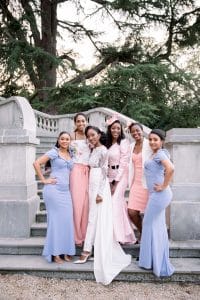
Paris has a particular way of making a ceremony feel like a scene from your own story. Perhaps you imagine saying your vows beneath the trees, with the sound of the city around you. Perhaps you picture just the two of you, or a handful of people who travelled across the ocean to be there.
A symbolic ceremony gives you that freedom.
There is no fixed format to follow. There is no legal script to read. You can create a ceremony around your relationship, your personality and the reason you chose Paris.
For American couples travelling to France, this can also make the experience much simpler. You can take care of the legal side separately, then create a ceremony that feels entirely yours.
Whether you are planning an elopement, an intimate destination wedding or a vow renewal, a symbolic ceremony can become one of the most personal moments of your Paris experience.
What is a symbolic ceremony?
A symbolic ceremony is a personal celebration of your relationship. It has no legal effect, but it can carry a great deal of emotional meaning.
The ceremony is usually led by a celebrant who tells your story, introduces the different moments and guides you through your vows or symbolic rituals.
It can include your parents, children, siblings or closest friends. It can also be just the two of you.
This flexibility is one of the reasons symbolic ceremonies work so well for destination weddings.
A symbolic ceremony is different from a civil ceremony. A civil ceremony creates the legal marriage. A symbolic ceremony celebrates your commitment without creating a legal status.
If you are considering a legal marriage in France, our guide to France legal wedding requirements can help you understand the administrative side.
A symbolic ceremony is also different from a religious ceremony. A religious ceremony follows the traditions and requirements of a particular faith. A symbolic ceremony does not require religious beliefs or a religious setting.
You can include cultural traditions, spiritual elements or family customs if they matter to you.
The important part is that they should have meaning for you.
Why choose a symbolic ceremony in Paris?

Paris offers countless settings for an intimate ceremony. You might choose a garden, a private venue, a beautiful hotel or another location that feels connected to your vision.
The ceremony itself can remain simple.
What matters is the experience you create around it.
For an elopement in Paris
An elopement does not have to mean running away without a plan.
It can mean choosing a wedding experience that focuses almost entirely on the two of you.
You might exchange vows in a beautiful Paris location, take photographs together and finish the day with a romantic dinner.
A symbolic ceremony works particularly well here because you can shape every moment around your relationship.
For couples looking for a more structured experience, our elopement in Paris packages bring together several elements of the day while leaving room for personalisation.
For an intimate destination wedding
Perhaps you are travelling from the United States with your closest family and friends.
You may have ten guests, twenty guests or a small group of people who matter most to you.
A symbolic ceremony allows the wedding to remain intimate.
Your guests can take part without the ceremony becoming formal or complicated. A sibling might give a reading. A parent might share a few words. A friend might tell a short story about your relationship.
You decide what feels right.
For couples planning their celebration from abroad, our guide to planning a destination wedding in Paris can also help you understand how the different parts of the experience fit together.
For a vow renewal
A symbolic ceremony is also a beautiful way to celebrate a marriage that already exists.
Perhaps you are celebrating ten years together. Perhaps you want to mark twenty five years of marriage. Or perhaps you simply want to return to Paris and say the words again.
There is something particularly moving about writing new vows after years together.
You know each other differently now.
Your story has changed. Your family may have grown. You may have travelled through difficult moments and wonderful ones together.
A vow renewal gives you space to acknowledge all of that.
You can find more inspiration in our guide to renewing your vows in Paris.
How does a symbolic ceremony in Paris work?
There is no single formula, but most ceremonies follow a natural progression.
A typical ceremony might include:
- Welcome and introduction
- A few words about the couple, the story of their relationship…
- Readings or words from family and friends, if desired
- Personal vows or consent exchange
- A symbolic ritual, if desired
- Exchange of rings, if desired
- Closing words
- A kiss and congratulations
The structure can be very simple.
For an elopement with two people, the ceremony may last around 10 to 15 minutes. An intimate ceremony with several readings and guest participation may take longer.
The duration matters less than the rhythm.
Nobody wants to feel as though they are sitting through a formal presentation. A good ceremony should feel like a conversation about two people who happen to be deeply in love.
The content should also sound like you.
Your celebrant can help you find the right balance between emotion, humour, memories and meaningful words.
You can also choose where the ceremony takes place. Our guide to beautiful places for a wedding ceremony in Paris can help you start thinking about the atmosphere you want.
How to choose the right celebrant for your Paris ceremony
Choosing an officiant is about much more than finding someone who can speak in front of a group.
The person leading your ceremony will tell your story.
They will guide you through your vows. They will set the rhythm. They will also help you feel comfortable during a moment that can be surprisingly emotional.
So what should you look for?
First, consider their experience with international couples.
If you are travelling from the United States, you may want an English speaking celebrant who understands the expectations of American couples.
The preparation process also matters.
A good celebrant should take time to understand your relationship. They should ask questions that go beyond your wedding date and venue.
For example, How did you meet? What makes you laugh together? What do you admire in each other? Which moments shaped your relationship?
These details create a ceremony that could not belong to another couple.
Personality matters too.
Some couples want a warm and emotional ceremony. Others prefer something lighter with a little humour. Some want a very elegant and traditional tone.
There is no universally right style.
The right celebrant is the person whose voice feels natural for your story.
How to make your symbolic ceremony feel truly personal
A meaningful ceremony does not need dozens of rituals.
Sometimes one personal detail says more than ten decorative elements.
Start with your story.
Instead of using generic phrases about love and happiness, share something real. Mention the strange first date. Talk about the trip that changed your relationship. Include the tiny habit that makes you laugh every morning.
Your vows can follow the same approach, you don’t need to write a perfect speech.
You need to say something true.
You can also involve your guests.
Consider asking someone close to you to:
- Read a short text
- Share a memory
- Welcome the couple
- Tell a funny story
- Present the rings
- Take part in a symbolic ritual
Music can also transform the atmosphere.
A song from your first date may mean more than a traditional wedding song. A piece connected to your family or your culture can also add another layer to the ceremony.
And remember the location.
Paris can become part of your story rather than simply a backdrop.
A ceremony in a garden creates a different feeling from one surrounded by historic architecture. Your choice of location should support the atmosphere you want.
A symbolic ceremony in Paris can be intimate, elegant and completely yours
One of the most beautiful things about a symbolic ceremony is its freedom.
You do not have to reproduce the wedding you have seen elsewhere.
You can have a ceremony for two.
You can invite your closest family.
You can renew vows after ten years of marriage.
You can exchange rings again. You can write new vows. You can simply stand together and acknowledge what brought you to Paris.
The ceremony can also become part of a larger destination wedding experience.
Perhaps you spend the morning exploring Paris together. You have your ceremony in the afternoon. Then you take photographs around the city before celebrating over dinner.
For an elopement, the day can remain focused on the two of you.
For an intimate wedding, your guests can enjoy their own Parisian experience while you share private moments together.
If you are still choosing your ceremony location, you can also explore our guide to the best places to photograph your French elopement in Paris.
Our tips to help you choose your celebrant
Take a little time to think about these points:
- Decide whether you want a romantic, emotional, elegant or more relaxed tone.
- Think about whether you want your guests to participate.
- Choose the language of your ceremony.
- Decide whether you want personal vows.
- Identify two or three meaningful moments from your relationship.
- Think about the kind of setting that suits your story.
- Meet or speak with your celebrant before making your choice.
The preparation should feel like part of the experience.
It should help you look back at your relationship and remember why you are celebrating in the first place.
FAQ : symbolic ceremony in Paris
Is a symbolic ceremony legally binding in France?
No. A symbolic ceremony has no legal effect.
If you want your marriage to be legally recognised, you need to complete the appropriate civil formalities. Some international couples choose to complete the legal marriage in their home country and then celebrate with a symbolic ceremony in Paris.
Can we have a symbolic ceremony without a civil wedding?
Yes.
You can organise a symbolic ceremony without having a civil ceremony in France. The ceremony can celebrate your commitment without creating a legal marriage.
Can a symbolic ceremony be held in English?
Yes.
For American couples travelling to Paris, an English speaking ceremony can make the experience much more natural. You can also choose a bilingual ceremony if some guests speak French.
How long does a symbolic ceremony in Paris last?
There is no fixed duration.
A simple elopement ceremony can take around 10 to 15 minutes. A ceremony with several readings and guest participation can last longer.
Can our guests participate in the ceremony?
Absolutely.
A symbolic ceremony makes it easy to include your closest people. You can ask them to read something, share a memory or take part in a symbolic ritual.
Can we have a symbolic ceremony for a vow renewal?
Yes.
Vow renewals are often symbolic ceremonies. They give couples the freedom to reflect on their years together and create new vows that reflect who they are today.
Can we choose our own location in Paris?
The possibilities depend on the location and its rules.
Paris offers many beautiful settings for intimate celebrations. The location should also suit the size and format of your ceremony.
What to remember
A symbolic ceremony is not a second civil ceremony. It is a celebration created around your relationship.
It can work beautifully for an elopement, an intimate destination wedding or a vow renewal.
The ceremony does not need to be long to be meaningful.
Your celebrant should understand your story, your personality and your expectations.
The most memorable ceremonies usually contain details that could belong only to you.
If you are planning a symbolic ceremony in Paris, you can also explore CEREMONIZE elopement experiences in Paris and consider which format feels most natural for your celebration.