As you begin your vows, you want to see the people you love looking back at you. An unplugged wedding ceremony can help create that atmosphere by asking guests to put their phones and cameras away.
For a destination wedding in France, the practical challenge is making that request clear to guests arriving from different countries. At CEREMONIZE, we approach it as part of ceremony planning, alongside language, timing and guest comfort.
What is an unplugged wedding ceremony?
An unplugged ceremony is a period when guests are asked to avoid taking photographs, filming or using their phones. Simply switching a phone to silent does not communicate the whole idea.
You can keep the request limited to the ceremony. Guests can then capture their own memories during the reception.
Permission to take photos is also separate from permission to publish them. Our guide to setting social media boundaries for your wedding explores that distinction.
1. Decide when you want guests to put their phones away
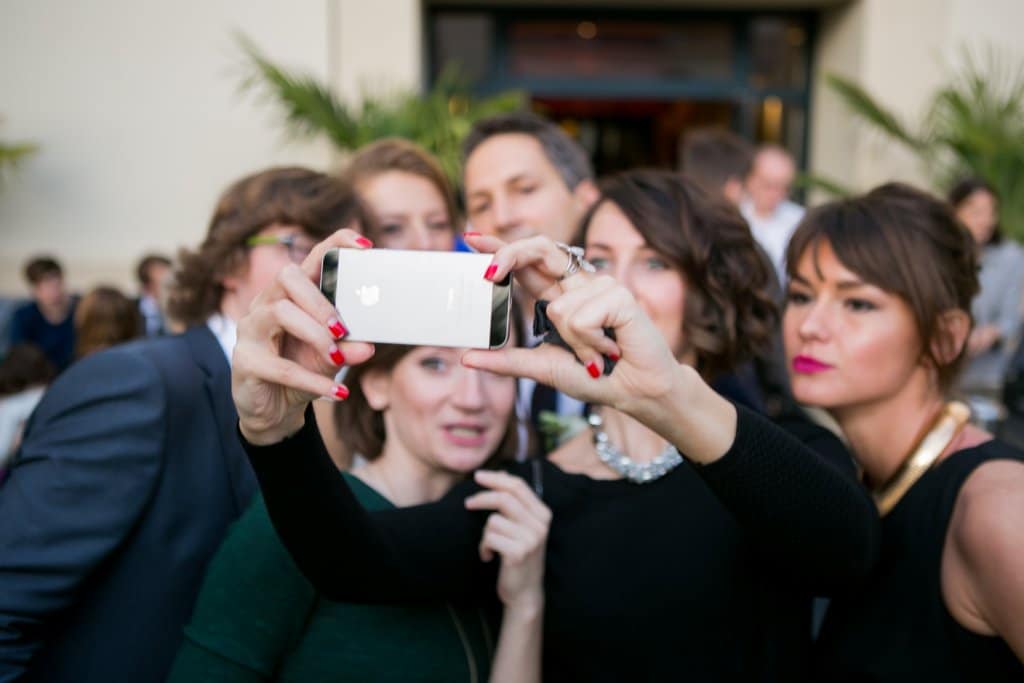
Choose a clear beginning and end. For example, you might ask guests to put devices away before the processional and keep them away until you have walked back down the aisle together.
Think about what you want to experience with your guests. After spending time writing meaningful wedding vows, you may appreciate seeing their reactions as you speak.
If you are including meaningful wedding ceremony rituals, consider whether guests will be holding ribbons, passing rings or joining a shared gesture. Keeping their hands free can make participation easier.
Avoid changing the rules several times during the ceremony. One clear request is easier to follow.
2. Tell your guests before they travel
Add a short note to your wedding website before guests leave home. Explain which part of the celebration will be unplugged and when personal photographs will be welcome again.
When organizing your Paris wedding guest logistics, include this preference alongside the ceremony information. It should be easy to find without becoming the main message of every email.
Use the languages your guests understand. For a wedding bringing together French and American families, a brief message in both French and English can help. A sign in English alone may leave some guests unsure.
Make room for individual needs. A guest using a device for accessibility or an urgent caregiving responsibility should be able to keep it available. Arrange this privately, without asking them to explain themselves to the room.
3. Choose wording that feels warm and clear
Explain what you would like guests to do and why their presence matters. These examples assume that personal photos are welcome after the ceremony. Adapt that timing to your plans.
Wedding website wording
We would love to share our ceremony with you fully present. Please put phones and cameras away from the processional until we have walked back down the aisle together. You are welcome to take photos afterward. Thank you for being part of this moment.
Unplugged ceremony sign wording
Welcome to our unplugged ceremony. Please silence and put away phones and cameras until the ceremony has ended. We look forward to seeing your smiles. Photos are welcome afterward.
A short announcement for your officiant
Before we begin, the couple invites you to put your phones and cameras away and enjoy the ceremony with them. Please keep them away until the couple has walked back down the aisle together. There will be time for your photos afterward. Thank you.
Place the sign where guests will see it before taking their seats. Ask the officiant to make the announcement before the processional begins.
4. Brief your officiant, photographer and planning team

Share the wording and timing with everyone involved in the ceremony. Decide who will make the announcement and who can quietly answer guest questions.
Discuss positions with your photographer, especially if your venue has narrow aisles or limited space around the ceremony area. Fewer guest devices may help keep sightlines clear, but professional movement still needs planning.
If you have booked a videographer, include them in the briefing. When planning your wedding film, clarify which readings, vows and reactions matter to you. An unplugged ceremony does not require you to book both photography and video.
Confirm any agreed exceptions with the team, such as a designated person handling a livestream. This helps avoid an unnecessary reminder directed at someone following your instructions.
5. Give guests another way to enjoy the memories
If you plan to share professional photographs, tell guests how they will receive them. Wait until you have agreed on delivery arrangements with your photographer before promising a date.
You might share a small selection privately or provide access to a gallery. Decide what you are comfortable sharing before sending the link.
When the ceremony ends, a brief invitation to take photos removes uncertainty. Later, a shared album can give guests somewhere to contribute their own reception pictures. Check the access settings before distributing it.
Key takeaways: Agree on the timing, repeat the same clear request and brief your ceremony team. Make room for individual needs. Let guests know when photographs are welcome again.
FAQ – Unplugged wedding ceremony
Can we livestream an unplugged wedding ceremony?
Yes. A designated broadcast can include loved ones who cannot travel while guests at the ceremony keep their phones away. Test the connection and sound at your venue. Assign someone to manage the stream so the couple and officiant can focus on the ceremony.
What if a guest takes photos despite our request?
Agree beforehand whether your planner should offer a discreet reminder. Avoid interrupting the vows or calling someone out publicly. A request can guide guest behavior, but it cannot guarantee complete compliance. Decide how much intervention feels right for you.
Should we collect guests’ phones before the ceremony?
We generally recommend letting guests keep their devices with them. Collecting phones creates storage and return logistics, and some guests need access to them. Clear advance communication, a visible sign and a spoken reminder offer a simpler starting point.
Plan a ceremony that feels like you
The right approach should reflect how you want to experience your ceremony together. A thoughtful request can leave more space for the words, expressions and shared gestures you want to remember. Through our wedding planning services in France, we help you bring those preferences into the