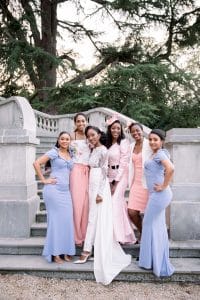
The most cohesive Paris wedding flowers do not begin with a list of fashionable blooms. They begin with the venue, the season and the feeling you want your guests to experience.
A Parisian floral design can be soft, natural or expressive. The right direction feels connected to your setting and story while respecting availability, access and budget. This guide will help you make those decisions and personalize a destination wedding without stress.
Start with the venue, season and atmosphere
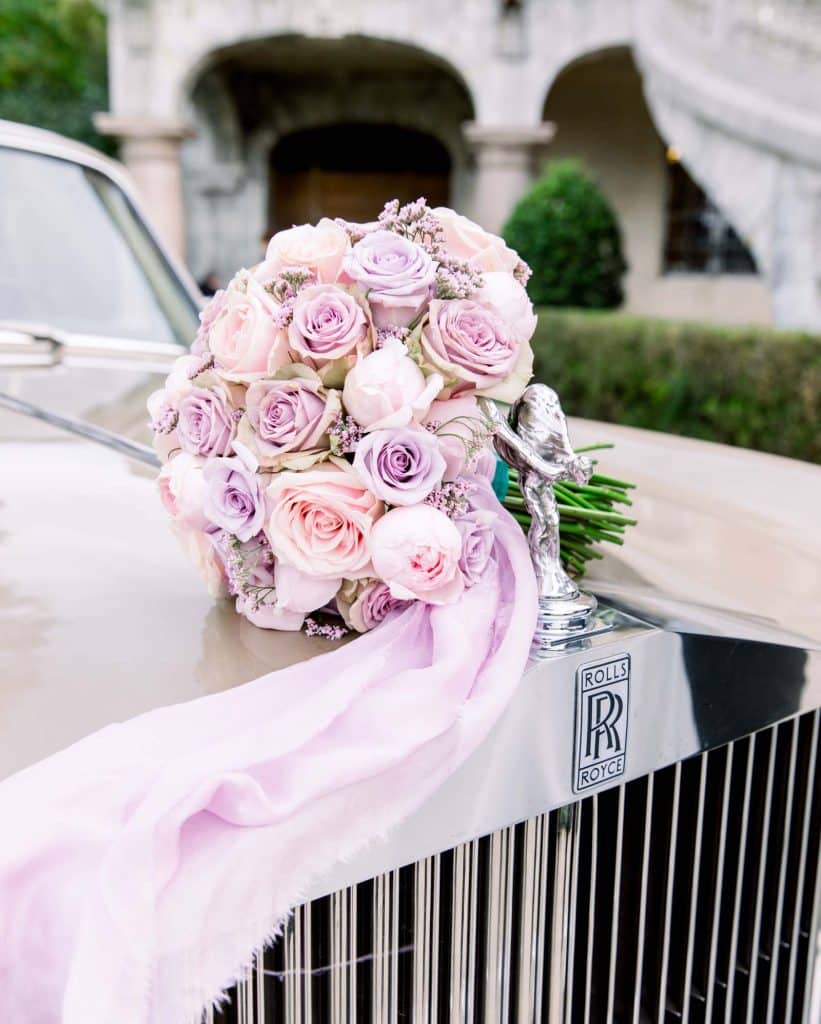
Before choosing particular flowers, define how you want the celebration to feel. Consider the venue, season and atmosphere together.
Read the venue before choosing the palette
Every Paris venue already has a visual identity. A historic salon, contemporary rooftop and garden each require a different floral response.
Your design can complement the setting or create a deliberate contrast. When exploring romantic wedding venues in Paris, notice the wall colors, natural light, ceiling height, furniture and gardens. These details influence the scale and colors of your arrangements.
Let the season shape the design
Season affects availability, light, temperature and the surrounding landscape. If one flower is essential, discuss it early. Your florist can suggest alternatives with a similar shape, movement or color when necessary.
Our guide to the best time to get married in Paris can help you connect the floral direction with the wider experience of each season.
Build a cohesive wedding color palette
A cohesive palette does not require every flower, napkin and dress to match. Each element simply needs to belong to the same visual story.
Choose a foundation color
Begin with one foundation color drawn from the venue, a favorite flower, your stationery or a meaningful object. Then decide whether the palette should feel warm or cool, soft or contrasted.
Add supporting tones and one intentional accent
Supporting tones create depth. One accent color can add energy without appearing in every arrangement. Reserve it for the bouquet, ceremony flowers or dinner tables.
Use this simple framework:
| Starting point | Question to ask | Effect on the floral design |
| Venue | Which colors and materials are already present? | The flowers complement or intentionally contrast with the setting. |
| Season | Which flowers and textures are naturally available? | The design feels connected to the time of year. |
| Atmosphere | Should the celebration feel soft, organic or expressive? | The florist can adjust color intensity, shape and volume. |
| Budget | Which spaces matter most to the guest experience? | Floral investment is concentrated where it has the greatest impact. |
For current inspiration, explore our wedding color trends for 2027. Treat trends as a starting point rather than a rule.
Explore three floral color directions
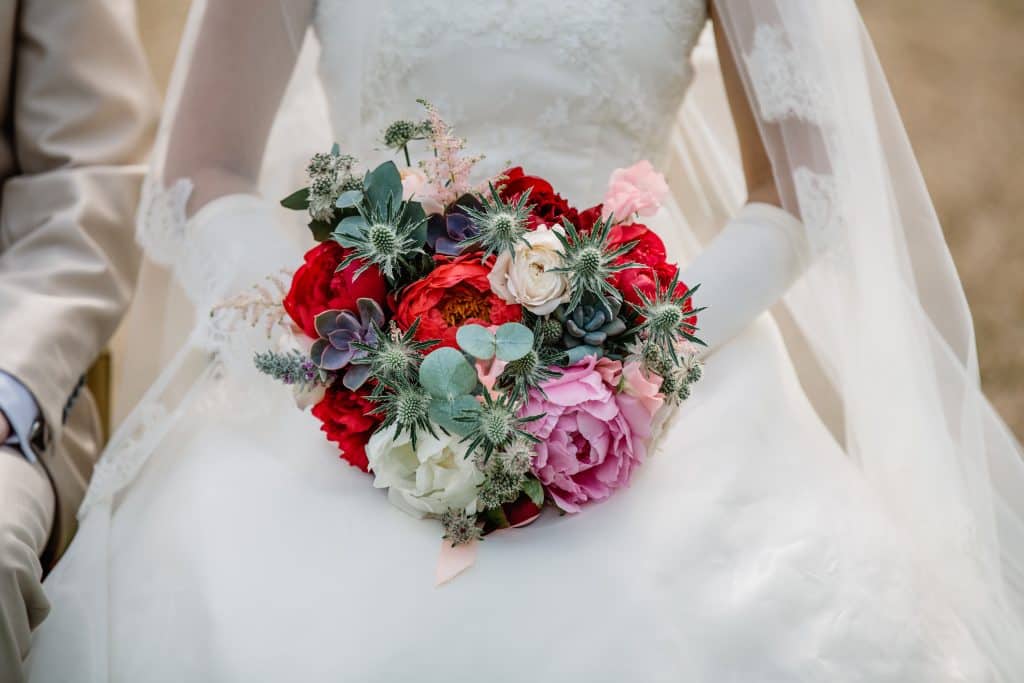
These directions can each be adapted to your venue, season and personality.
Soft and romantic palettes
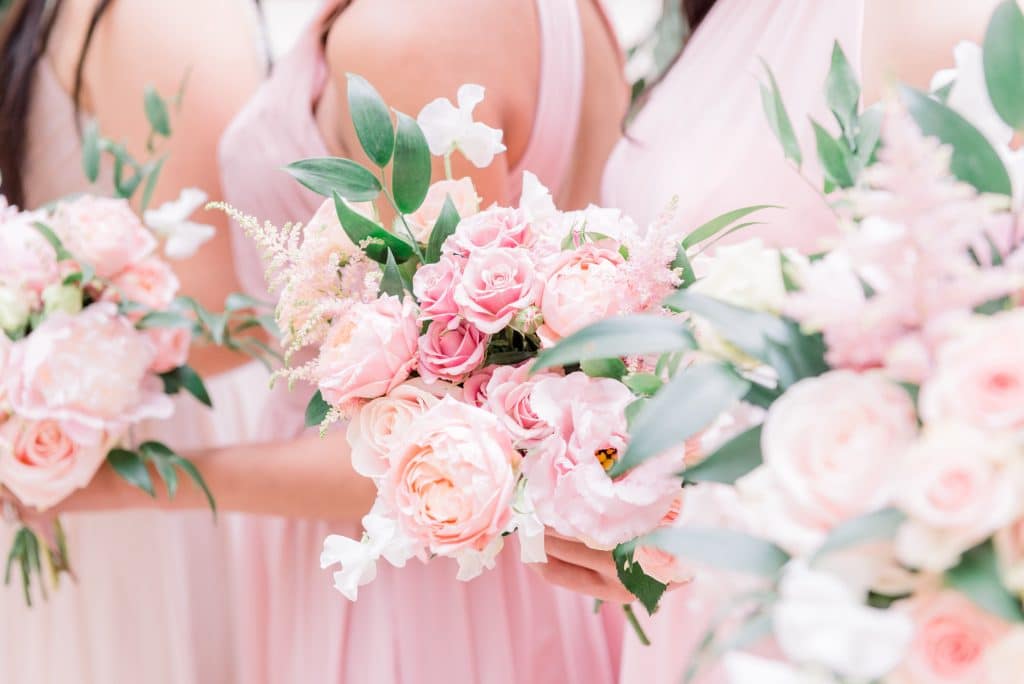
Ivory, cream, blush, dusty rose and lavender create a gentle atmosphere. Variations in shape and tone add depth without competing with detailed architecture.
Earthy and natural palettes
Terracotta, mocha, ochre, sage and muted greens bring warmth. Stone, linen and ceramic details can extend the palette. Clean proportions keep the result appropriate for a Paris setting.
Rich and expressive palettes
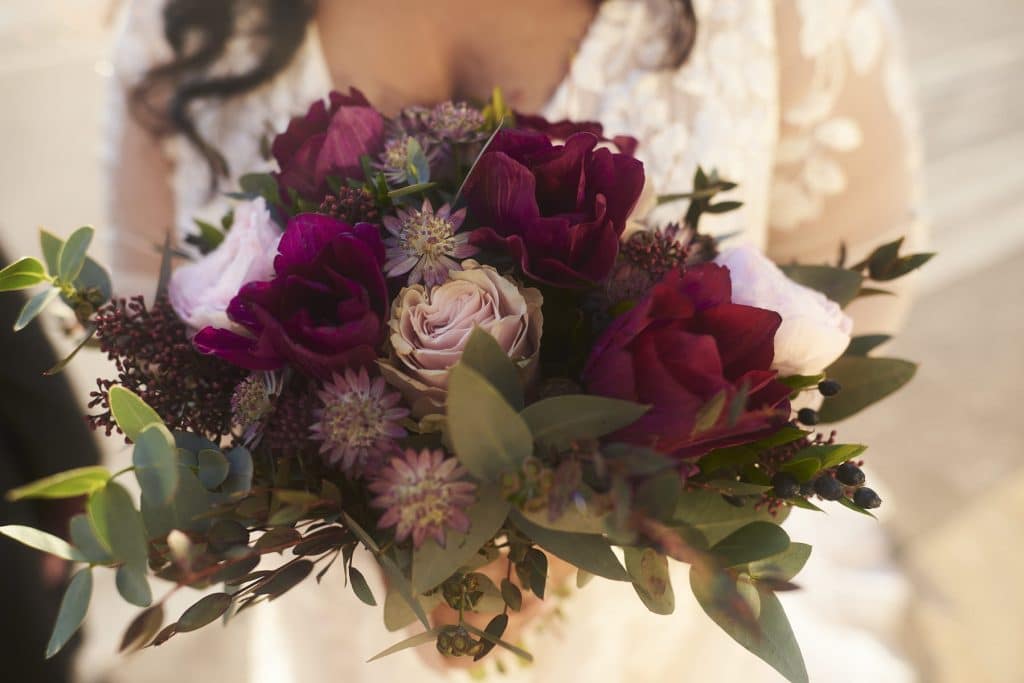
Burgundy, plum, fuchsia and deep green create a confident direction when balanced with quieter tones. Colors such as midnight blue may be easier to introduce through stationery, linens or candles than through flowers.
Choose flowers for availability, texture and meaning
Shape, movement, scent and texture are as important as color. They affect how an arrangement feels in the room and appears in photographs.
Prioritize seasonal and locally grown alternatives
Flowers grown in France can reduce transport and strengthen the connection to the destination. Not every flower must be local, but sourcing and alternatives should be discussed. Our sustainable approach to destination weddings considers these choices alongside logistics and waste.
Use flower symbolism in a personal way
Roses, peonies, lilies and orchids all carry traditional associations. These meanings vary across cultures and families. A flower from a childhood garden may be more significant than its conventional symbolism.
Add meaning through a shared bouquet ritual
Each member of the wedding party can offer one flower to the couple during the ceremony. The flowers are gathered into a shared bouquet that reflects the people surrounding you.
Carry the palette beyond the flowers
The palette should continue through stationery, linens, candles, tableware and lighting without appearing everywhere in equal amounts.
Your flowers should support the atmosphere rather than force a generic Paris wedding theme onto the venue. Instead of choosing a separate bouquet theme, repeat one or two colors or textures from the wider design.
Wedding party attire does not need to match exactly. A shared undertone is often enough.
Focus the floral budget where it matters most
Flower varieties, quantities, season, labor, transport and installation all affect the floral proposal.
Prioritize personal flowers and ceremony focal points
Begin with personal flowers, then identify one or two ceremony focal points. The area where you exchange vows may deserve more attention than spaces guests pass through briefly.
This intentional approach reflects the wider shift toward investing in the wedding experience rather than decoration alone.
Plan reception flowers and large installations
Reception flowers should enhance conversation and respect sightlines. Suspended flowers and ceremony structures require venue approval, access time and a removal plan.
Some ceremony arrangements can move to the reception. Timing, distance, construction and weather determine whether this is practical.
Prepare a clear brief for your Paris wedding florist
A useful floral brief should include:
- Your date, venue and guest count.
- The ceremony and reception spaces.
- The atmosphere and colors you want.
- Flowers you like, dislike or associate with a memory.
- Your flexibility about seasonal substitutions.
- Your floral budget and priorities.
- Delivery, installation, venue and weather constraints.
Explain what you appreciate in each reference image, whether it is the color, movement, scale or flower variety. Begin discussions once the date, venue and overall direction are confirmed. Complex installations and popular dates require more preparation.
For couples planning from abroad, local coordination connects the creative brief with access schedules and venue rules. It also helps avoid common mistakes when planning a wedding in France.
Key takeaways
- Choose the venue and atmosphere before finalizing the flowers.
- Let the season guide availability, texture and practical alternatives.
- Build the palette around a foundation color and a small number of supporting tones.
- Use trends for inspiration without allowing them to define the entire wedding.
- Carry the palette through materials, light and stationery as well as flowers.
- Concentrate the floral budget on meaningful and visible areas.
- Give the florist a clear brief while remaining flexible about seasonal substitutions.
Frequently asked questions about Paris wedding flowers
What flowers work best for a Paris wedding?
Choose flowers suited to the season, venue and atmosphere. Your florist can recommend varieties with the right color, texture and movement.
Should wedding flowers match the venue?
They should relate to the venue without copying its colors. They may complement the architecture or create an intentional contrast.
Can we request peonies outside their natural season?
Availability depends on the season, growing conditions and suppliers. Imported peonies can affect cost and sourcing. Ask for alternatives with a similar shape or softness.
When should we book a Paris wedding florist?
Begin once your venue, date and design direction are clear. Book earlier if your date falls during a popular period or if the project requires custom structures and extensive installation.
How can we make wedding flowers more sustainable?
Choose seasonal flowers grown closer to the venue when possible. Ask about reusable mechanics, repurposing and plans for the flowers after the celebration.
How much do wedding flowers cost in Paris?
There is no standard figure. Varieties, season, quantities, labor, transport and technical requirements all affect cost. A detailed brief produces a more relevant proposal.
Bring your Paris wedding design together
Flowers are most effective when the venue, ceremony, tables and lighting support the same intention.
At CEREMONIZE, we help international couples coordinate the creative and practical details of their celebration. Discover our approach to destination wedding planning in France.