Planning a wedding in Paris from another country can feel wonderfully exciting. It also involves decisions that are difficult to evaluate from a distance.
The most important mistakes to avoid when planning a wedding in Paris are rarely related to style. They usually concern legal requirements, budgets, venue limitations, travel times and cultural differences.
These difficulties should not discourage you. Most can be prevented through early decisions and reliable local information.
Here are ten common Paris wedding planning mistakes, with practical ways to avoid them.
Mistake 1: assuming a civil wedding in Paris will be simple
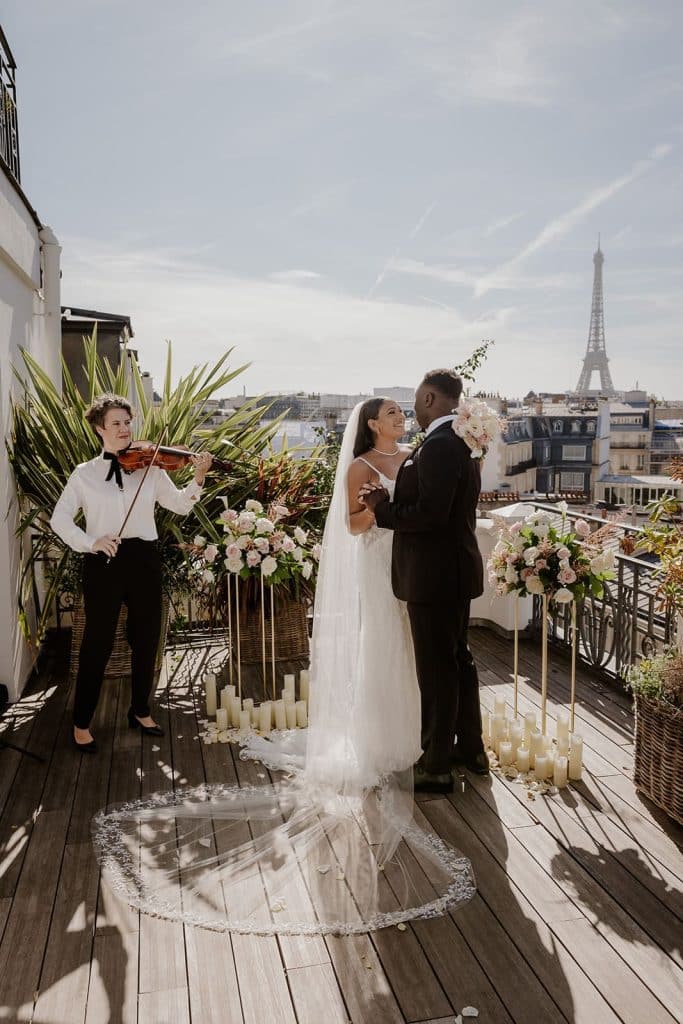
A civil wedding in France is a legal and administrative process. It cannot simply be added to the wedding day because a couple has chosen Paris as their destination.
According to official French guidance, a civil marriage must normally take place in a commune connected to one of the partners, or in certain circumstances to one of their parents, through domicile or residence.
Nationality, residence status and individual circumstances can also affect the documents required. Couples should confirm their eligibility with the relevant French authorities before making plans based on a civil ceremony.
We once worked with a couple who believed they could arrive in Paris and simply sign their marriage documents. Once the administrative requirements became clear, they decided to complete their legal marriage at home. They then organized a personal symbolic ceremony in Paris.
This is a common and meaningful solution. It allows couples to separate the legal procedure from the celebration they want to share with their guests.
Our guide to the legal wedding requirements in France explains the main points to consider.
Mistake 2: booking a venue before defining the complete budget
A venue can shape the entire wedding. However, its rental price represents only one part of the total budget.
Before signing a contract, consider catering, beverages, furniture, tableware, staffing, sound equipment, lighting, floral design, transportation and planning fees. Some venues include several of these services. Others provide only the space.
A venue that initially appears affordable may require significant additional rentals. Another property may have a higher starting price but include furniture, staff and equipment.
Guest count matters, but not every expense changes with the number of guests. Photography, entertainment, transportation and technical production often include fixed costs.
Begin with a realistic overall budget. Then decide how much can be allocated to the venue without restricting the rest of the celebration.
Our guides explain how much a wedding in Paris costs and how to build and manage a Paris wedding budget.
Mistake 3: choosing a venue from photographs alone
Beautiful photographs reveal atmosphere. They do not reveal how a venue functions during an event.
A room may look spacious online but feel very different once it contains dining tables, a dance floor, musicians and service stations. A terrace may be attractive but subject to limited hours or sound restrictions.
Before booking, confirm the capacity for your exact layout. Ask about preparation rooms, furniture, catering access, vendor installation, departure times and the rain configuration.
Guest access also matters. Check stairs, elevators, parking, drop off points and the distance between each part of the celebration.
If you cannot visit personally, ask for measured plans, recent videos and detailed photographs. A local professional can also inspect the property and document practical details on your behalf.
Explore our selection of romantic wedding venues in Paris when comparing different settings.
Mistake 4: waiting too long to secure the venue and key vendors
There is no single booking schedule that suits every Paris wedding. Availability depends on the date, venue, guest count and services required.
A central venue on a sought after Saturday may need to be secured earlier than an intimate weekday restaurant celebration. The same applies to photographers, caterers, musicians and floral designers with distinctive styles.
Confirm the venue and the services that matter most to you first. Less critical details can follow once the main framework is established.
Waiting until every visual idea is finalized can reduce your options. A clear date, budget and level of priority are usually enough to begin.
A structured destination wedding planning timeline can help you decide what to book and when.
Mistake 5: underestimating travel times and access in Paris
Two locations may appear close on a map but require more travel time than expected. Traffic, loading restrictions and the number of vehicles involved can all affect the schedule.
Guest transportation is only part of the calculation. Florists, musicians, rental companies and caterers also need suitable access. Historic buildings may have narrow entrances, limited elevators or precise installation hours.
We once reviewed a beautiful property outside Paris for a couple who had not realized how complex the guest transfers would be. The venue remained possible, but the transportation plan and event schedule needed to be reconsidered.
Whenever possible, test important routes on the same day of the week and at a similar time. Add realistic boarding time for groups. Confirm where coaches and private cars can stop.
Our guide to managing guest logistics for a Paris wedding covers accommodation, transportation and guest communication in more detail.

Mistake 6: assuming fluent English removes every cultural difference
Speaking the same language does not automatically create the same expectations.
Depending on the vendor, proposals may be structured differently from those used in the United States. Service options, payment schedules and approval processes may also be presented in unfamiliar ways.
Cultural differences can appear in the celebration itself. Dinner service may last longer. Dessert may be served later. Speeches, entertainment and dancing may follow a different rhythm.
These variations are neither better nor worse. They simply need to be discussed.
Ask precise questions about what is included, what requires separate approval and when each decision becomes final. Written summaries are particularly useful when several people are involved.
At CEREMONIZE, our role includes translating creative intentions into clear instructions that work within French practices. Understanding French wedding traditions and customs can also help couples decide what they want to adopt or adapt.
Mistake 7: planning remotely without local verification
A large part of a Paris wedding can be organized from abroad. Video meetings, digital plans and online proposals make collaboration much easier.
However, some details still benefit from local verification.
A floor plan cannot always show how guests will move through a building. A virtual tour may not reveal street noise, limited service access or the time required to move between locations.
Contracts also need to be compared carefully. Similar services can be described in different ways. Furniture, staffing, equipment and delivery may be included in one proposal but charged separately in another.
When you cannot attend a site visit, appoint someone who can ask practical questions, take measurements and provide a documented report.
Delegating local verification does not mean losing creative control. It gives you better information for each decision.
Mistake 8: treating the weather plan as a secondary detail
A weather plan should be developed at the same time as the preferred outdoor plan.
Rain is not the only consideration. Summer heat, cool evenings and limited winter daylight can affect the ceremony, dinner and photography schedule.
Summer planning also extends to the catering. Our tips for serving wedding desserts in summer cover the storage, presentation and timing to discuss with your team.
A backup room is useful only if it can accommodate the correct number of guests and the planned layout. It should also provide suitable access, lighting, sound and atmosphere.
Ask how long the transition between outdoor and indoor arrangements will take. Confirm when the final weather decision must be made and who has the authority to make it.
The right precautions vary throughout the year. Our guide to the best time to get married in Paris explains the practical characteristics of each season.
Mistake 9: building the schedule around US habits without adapting it
Many American couples begin with a familiar sequence: ceremony, cocktail hour, dinner, speeches, cake and dancing.
That sequence can work in Paris, but the timing may need to change.
Travel between locations can extend the gap between the ceremony and reception. A French style seated dinner may take longer than expected. Venue closing times can influence the start of dancing. Photography at several Paris locations also requires realistic transfer time.
Traditions can be adapted without losing their meaning. Speeches can be divided between courses. A first look may reduce pressure later in the day. Cake service can be coordinated with entertainment and venue hours.
The schedule should reflect your priorities while remaining workable for guests and vendors.
Mistake 10: giving guests too little information or too little free time
Destination wedding guests need more guidance than local guests. They are making travel, accommodation and budget decisions around the celebration.
Share the dates and locations of hosted events as early as possible. Explain transportation arrangements, dress expectations and any activities that require advance registration.
Guests should also understand which events are included and which expenses they will manage independently.
However, providing information does not mean planning every hour of their stay. Many guests will want time to explore Paris, rest or make personal plans.
A thoughtful destination wedding balances shared experiences with independence. Our guides to guest logistics in Paris and wedding celebrations before and after the wedding day can help you shape the complete guest experience.
Paris wedding planning checklist
Before confirming the main elements of your Paris wedding, check that:
- You have chosen between a legal, religious or symbolic ceremony.
- Your complete budget includes services beyond the venue.
- The venue has been assessed for your exact layout.
- You understand every inclusion and additional cost.
- Guest and vendor routes have been reviewed.
- The weather plan works for the full guest count.
- Your priority vendors have been identified.
- The schedule reflects Paris travel times and venue rules.
- Guests know what is organized and what they should arrange.
- Someone can verify essential details locally when you cannot attend.
Frequently asked questions about Paris wedding planning mistakes
How far in advance should we start planning a Paris wedding?
There is no universal lead time. It depends on the date, venue, number of events and complexity of the celebration.
Begin once your approximate budget, guest count and preferred period are clear. Secure the venue and priority vendors before concentrating on smaller decorative details.
Can American couples legally get married in Paris?
American couples may be able to complete a civil marriage in France if they satisfy the applicable legal and residency conditions.
Couples without the required connection to a French commune often complete the legal marriage in the United States. They can then hold a symbolic or religious ceremony in Paris.
Always confirm your personal situation with the relevant French authority.
What should we check before booking a Paris wedding venue?
Confirm the capacity for your chosen layout, rain plan, access, available furniture, technical equipment, sound restrictions and event hours.
You should also understand the catering arrangements, staffing requirements and conditions for vendor installation and collection.
How can we plan a Paris wedding without visiting every vendor?
Use video meetings, virtual tours, measured plans, written proposals and detailed contracts. Ask vendors to confirm decisions in writing. For venue, route and technical questions, arrange a delegated site visit with someone who can provide measurements, photographs and practical observations
Do we need a local wedding planner in Paris?
A wedding planner is not a legal requirement.
Local support can be particularly useful for celebrations involving several venues, extensive guest transportation, complex production or vendors working under different cultural expectations.
The appropriate level of support depends on your plans and how much you want to manage from abroad.
What information should we give our destination wedding guests?
Provide event dates, addresses, accommodation guidance, transportation details and dress expectations. Explain which events are hosted and where guests will make their own arrangements.
Allow enough free time for rest and personal plans. A destination wedding should feel like an invitation to experience Paris, not a continuous schedule of obligations.
Planning a wedding in Paris becomes easier when legal, financial and logistical decisions are addressed early. Clear information gives you more freedom to concentrate on the atmosphere and experiences that matter to you.
If you would like local guidance throughout the process, discover our full service destination wedding planning in France. CEREMONIZE can help you evaluate venues, coordinate French vendors and build a celebration that reflects your priorities.