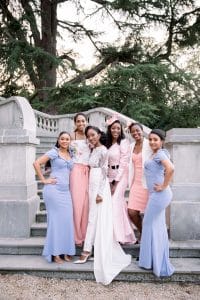
The gates of the château opened onto a tree lined driveway, the late afternoon sun illuminated the stone façade and guests chatted in both French and Japanese. Some relatives had travelled halfway across the world for this celebration. Others were discovering Japan through small details scattered throughout the day. This French Japanese wedding in France was much more than a ceremony. It was the meeting of two families, two languages and two ways of celebrating love.
For A and G, choosing France was an obvious decision. One of them had grown up there, while the other came from Japan. Bringing everyone together in a private château created an intimate atmosphere that felt elegant and deeply personal. Every decision reflected both cultures, from the bilingual stationery to the sake toast shared during dinner.
Planning an international wedding from abroad always raises questions. How do you help guests communicate? Which traditions should you include? How do you create a celebration that feels balanced? This wedding offered beautiful answers.
Why France was the perfect setting for this French Japanese wedding
Many international couples dream of celebrating in France, especially when one partner has family roots there. For A and G, the French countryside offered exactly what they were looking for. The château combined history, privacy and the relaxed elegance that many foreign guests associate with France.
The choice of a small venue also allowed the couple to focus on meaningful moments rather than a large production. Intimate weddings often appear simpler on paper, yet they require careful coordination and thoughtful planning. As we explain in organising a very small wedding in Paris, do you think that’s easy?, a smaller guest list does not automatically mean less work.
Because several guests were travelling from Japan, the couple also had to think carefully about accommodations, transportation and activities around the wedding weekend. Organising time together before and after the celebration helped both families connect naturally. Couples facing similar questions may find inspiration in our guide about organizing wedding guest activities for your Paris wedding.
France also appealed to the Japanese guests because of its reputation for refinement. The art of entertaining, beautiful tables and long dinners are all part of what makes a destination wedding here so memorable. We explore this atmosphere further in what makes French weddings so glamorous?.
How the couple blended French elegance with Japanese traditions
Bilingual stationery and thoughtful details
One of the most touching aspects of this French Japanese wedding in France was the attention given to small details. Every guest had to feel included, regardless of their language or cultural background.
The stationery was therefore designed in both French and Japanese. Menus, welcome signs and ceremony booklets helped everyone follow the day without hesitation. For international couples, digital tools can also simplify communication months before the wedding. We discuss this in our article about 6 reasons to use digital wedding invitations.
The guest gifts created another bridge between the two countries. Delicate presents brought from Japan sat alongside French touches inspired by the region. These details may seem small, yet they often become the memories guests keep for years.
The couple also reflected carefully on the size of their celebration. International weddings frequently lead couples to rethink traditional guest lists. Our article about who to invite to my elopement explores these choices, even though A and H ultimately opted for a larger gathering.
Elegant decoration inspired by two worlds
The decoration embraced the beauty of simplicity. The château itself provided much of the atmosphere, allowing the couple to avoid anything excessive.
Long tables were dressed with soft flowers, candles and understated details. The result felt distinctly French while preserving the minimalist elegance often associated with Japanese aesthetics.
Rather than creating separate universes, the design merged both identities into a single story. Couples looking for inspiration can discover more ideas in floral inspirations for luxury Paris weddings.
Every culture also carries its own symbols and traditions. Some families embrace them fully, while others reinterpret them in a contemporary way. We explore these fascinating customs in marriage superstitions, proverbs and traditions.
The couple also reflected carefully on the size of their celebration. International weddings frequently lead couples to rethink traditional guest lists. Our article about who to invite to my elopement explores these choices, even though A and H ultimately opted for a larger gathering.
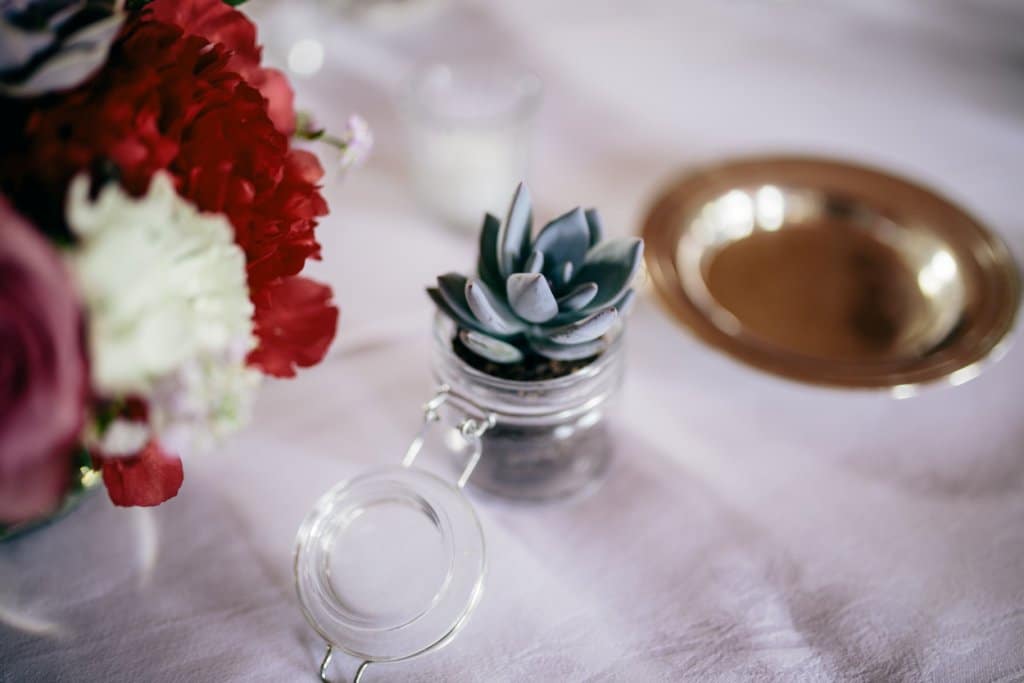
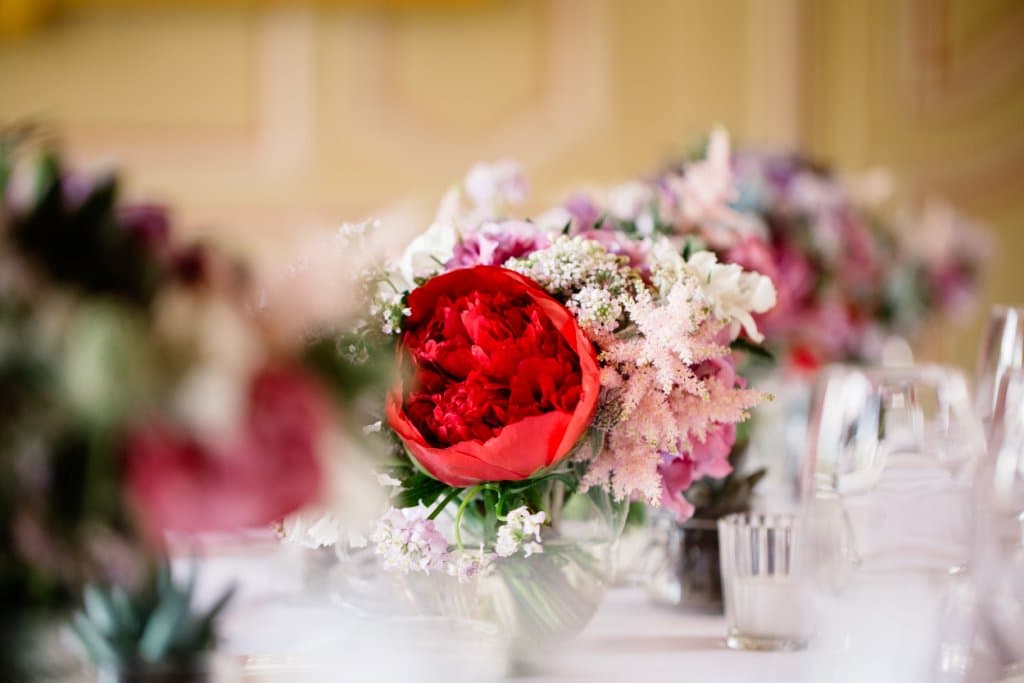
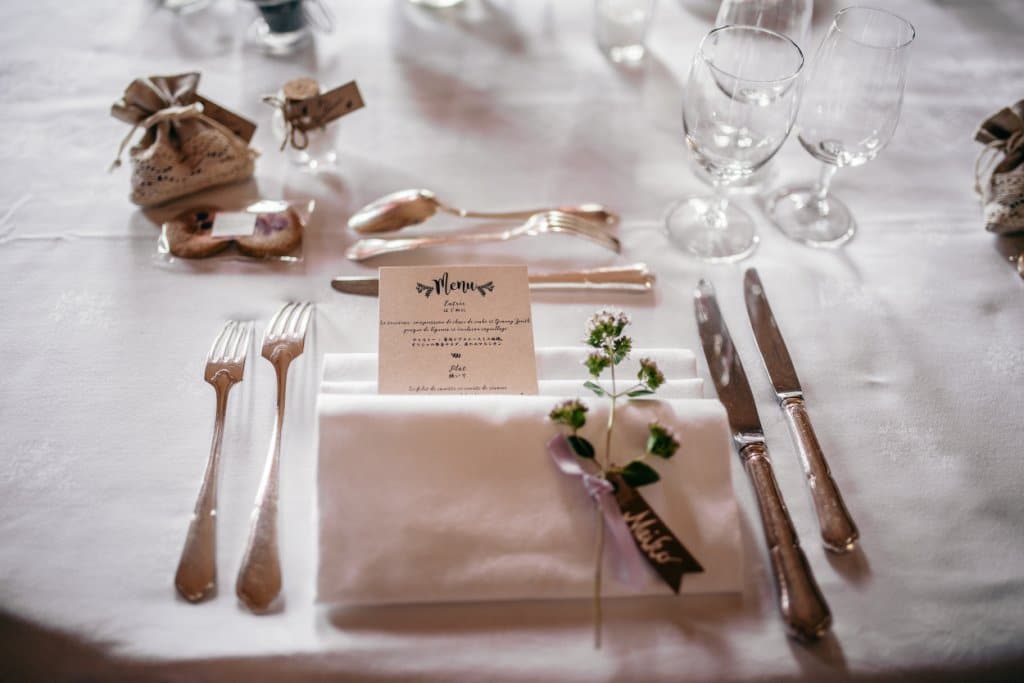
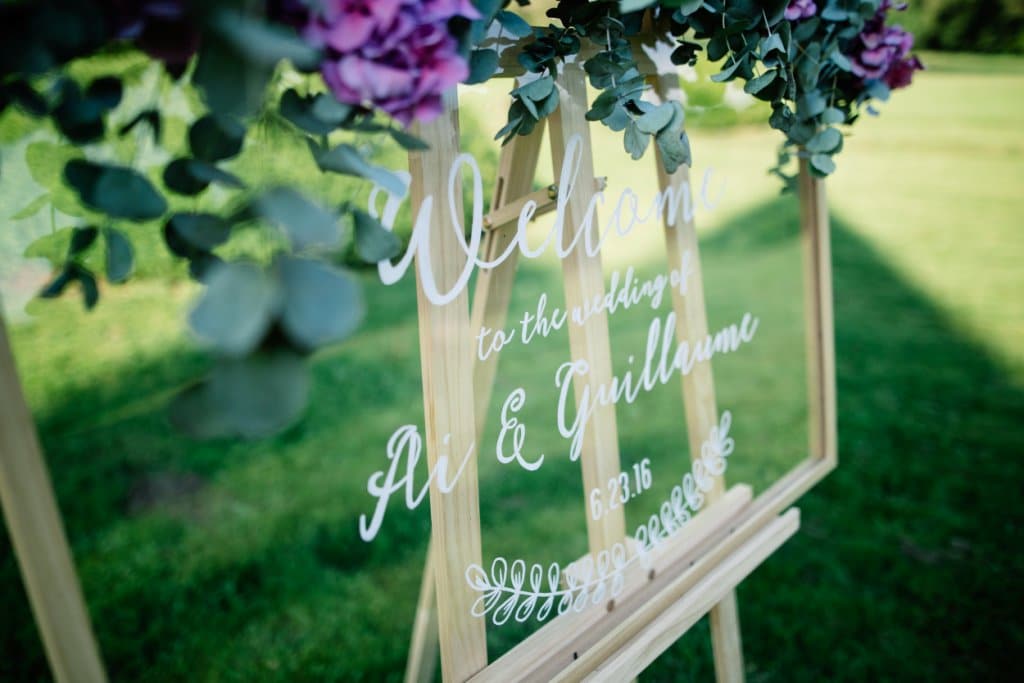
Photo credit : Fred Porez
Bridging the language gap between the two families
The role of the translator during the wedding
One of the smartest decisions A and G made was to hire a translator for the celebration. Beyond translating words, this person helped create connections between two families who had never spent much time together.
Throughout the ceremony and dinner, speeches were translated so that everyone could share the same emotions. Instructions, anecdotes and jokes flowed naturally from one language to another.
A translator also reassures guests who may feel uncomfortable travelling abroad. Combined with careful logistics, this support creates a more relaxed atmosphere. Our article on managing guest logistics for your Paris destination wedding explores these challenges in greater detail.

Photo credit : Fred Porez
Different wedding traditions, shared emotions
The dinner revealed some beautiful cultural differences. French weddings often favour lively conversations and long evenings, while Japanese speeches traditionally follow a more formal structure.
One moment particularly moved the guests. Several Japanese relatives gave speeches during dinner. In Japanese culture, lengthy speeches are often a sign of affection and respect for the couple. Listening to these heartfelt words, even through translation, became one of the emotional highlights of the evening.
The celebration also included a sake toast, creating a symbolic bridge between the two families. Rituals do not always need to dominate a wedding to make an impact. Even a few carefully chosen traditions can transform the atmosphere.
Many multicultural couples also choose to include symbolic rituals during their ceremony. If you are considering this approach, our article about a symbolic ceremony organised by a French wedding planner may inspire you.
Practical considerations for couples planning a French Japanese wedding in France
Planning an international wedding involves more than choosing flowers and music. Time zones, cultural expectations and travel arrangements quickly become part of the conversation.
Here are some of the topics A and H had to manage :
- Accommodation for guests arriving from Japan.
- Transportation between Paris and the château.
- Bilingual communication with vendors.
- Gift etiquette and local customs.
- Activities for guests staying several days.
- Coordination between both families.
Guests themselves often have many questions before attending a French wedding. Dress codes, gifts and etiquette may differ from what they know at home. We answer many of these questions in I’m invited to a French wedding : what to wear, what to give.
Comparing expectations from both cultures
| French traditions | Japanese traditions | How they can be combined |
| Cocktail hour with drinks and conversation | Formal speeches and rituals | Bilingual speeches during dinner |
| Relaxed evening celebrations | Structured schedule | A balanced timeline |
| Local gastronomy | Gift giving traditions | Guest presents from Japan |
| Informal family interactions | Respectful etiquette | A translator facilitating exchanges |
Budget is another important topic. Although intimate weddings may appear less expensive, international logistics often create additional costs. Couples planning a similar event can read our article about what budget should you expect for a wedding in Paris?.
Planning checklist for an international wedding in France
If you are planning your own French Japanese wedding in France, this checklist may help :
- Choose a venue accessible for international guests.
- Prepare stationery in both languages.
- Hire a translator or bilingual coordinator.
- Think about cultural rituals you would like to include.
- Organize transportation and accommodations.
- Brief your vendors about family traditions.
- Plan activities before or after the wedding.
- Allow enough time for speeches and family moments.
Every couple creates a different balance between their cultures. The goal is not to reproduce traditions perfectly, but to build a celebration that feels authentic to your story.
At CEREMONIZE, we often accompany international couples who wish to unite families from different parts of the world. The most memorable weddings are rarely those that follow every tradition. They are the ones that create new traditions together.
FAQ – French Japanese wedding in France
Do we need a translator for a French Japanese wedding?
Not always, but a translator can greatly improve communication between guests and families. It also helps everyone enjoy speeches and ceremonies without feeling excluded.
How can we include Japanese traditions in a French wedding?
Many couples choose symbolic gestures such as a sake toast, bilingual stationery, guest gifts from Japan or traditional speeches.
Is a château suitable for an international wedding?
Yes. A château often provides accommodation, privacy and enough space for guests travelling from abroad.
How far in advance should we plan a multicultural wedding in France?
Most couples begin planning between twelve and eighteen months before the wedding. This leaves enough time to coordinate travel and cultural details.
Good to know
- Small details often create the strongest connection between cultures.
- Bilingual communication helps guests feel included.
- A translator can transform the experience for both families.
- French elegance and Japanese minimalism work beautifully together.
- The best multicultural weddings create new traditions rather than choosing one culture over another.