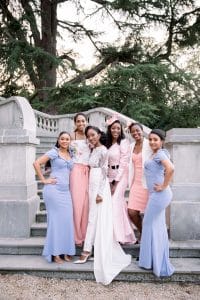
Parisian wedding style is not defined by a collection of obvious symbols. It is not necessary to place miniature Eiffel Towers on the tables or cover the reception in black, white and gold.
The most elegant Paris weddings usually take a more subtle approach.
The architecture, flowers, fashion, stationery and gastronomy work together. Each detail has a purpose. The result feels connected to Paris without becoming a themed event.
French customs can naturally contribute to this atmosphere. A vin d’honneur, a carefully paced dinner or a French dessert can enrich the experience. Couples who want to understand these cultural elements can explore our guide to French wedding traditions.
In this article, we focus on something different. We look at how to create a visual and sensory experience inspired by Paris while keeping your wedding personal.
What defines Parisian wedding style?

Parisian style often relies on balance.
A historic room may be paired with contemporary flowers. A simple gown may be complemented by beautiful fabric and precise tailoring. A traditional French dinner may be served in a relaxed and modern setting.
Elegance does not come from adding more decoration. It comes from choosing the right details and allowing the venue to breathe.
For international couples, this can require a change of perspective. The aim is not to recreate an image of Paris seen in a movie. It is to work with the real city, its architecture, its light and its culture.
1. Choose a venue that already feels Parisian
The venue creates the foundation of the wedding design.
When a space has architectural character, it needs less decoration. Moldings, fireplaces, tall windows, parquet floors and garden views can establish the atmosphere before the first flower is installed.
Our guide to romantic wedding venues in Paris explores several types of settings for an intimate or larger celebration.
Private salons and historic residences
An hôtel particulier or a private salon can provide the elegance many couples associate with Paris.
These venues often combine architectural detail with a sense of privacy. They can be particularly suitable for couples who want their guests to experience Paris without holding the reception in a busy public setting.
The scale of the rooms matters. A smaller salon can feel warm and sophisticated for an intimate dinner. A succession of rooms may create a natural progression from cocktails to dinner and dancing.
Rather than hiding these features, the design should reveal them.
Gardens, rooftops and creative spaces
Parisian style does not have to mean gilded interiors.
A private garden can offer a softer interpretation of the city. A rooftop can place the Paris skyline at the center of the experience. An art gallery or contemporary space can create an interesting contrast with more traditional details.
The best time to get married in Paris will also influence the type of venue and atmosphere you can create. Spring gardens, summer terraces and candlelit winter salons each suggest a different design direction.
2. Let the architecture guide your wedding design

A Parisian venue should not be treated as an empty room.
Its colors, proportions and existing details can guide the entire visual identity. Starting with the architecture helps prevent the decoration from feeling disconnected or excessive.
Build the palette around the venue
Before choosing a color palette, observe the space carefully.
Look at the walls, flooring, curtains, furniture and natural light. A room with warm stone and gold details may work beautifully with soft neutrals, muted green or deeper seasonal tones. A contemporary white space can support sharper contrasts or more sculptural flowers.
The palette should also remain coherent with the season. Our guide to wedding color trends for 2027 can provide inspiration, but trends should always be adapted to the venue and the couple.
A fashionable color is not automatically the right color for every Paris wedding.
Create continuity through the stationery
Stationery introduces the atmosphere before guests arrive in France.
The invitation suite can reflect a detail from the venue, the shape of a window, an architectural drawing or the texture of the interior. This reference can then continue through the menus, place cards and seating plan.
Consistency matters more than complexity.
A restrained typography, thoughtful paper and one recognizable design element can create more impact than several unrelated decorative ideas.
3. Design flowers with movement and restraint
Flowers can transform a space, but they do not need to conceal it.
For a Parisian wedding, we often recommend working with the proportions and movement of the venue. Flowers can frame a fireplace, follow the curve of a staircase or bring softness to a formal dining room.
Seasonal varieties can also make the design feel more natural. They connect the celebration to its date and reduce the impression that the flowers could have been installed in any venue at any time of year.
Table arrangements should support conversation. Their height, width and placement need to work with the tableware, candles and service.
Parisian elegance often appears in the spaces left between the details. A table does not need to be filled from one end to the other. A few carefully composed elements can allow the flowers, linen and tableware to be appreciated individually.
4. Approach wedding fashion with quiet confidence
Parisian wedding fashion is often associated with confidence rather than display.
This does not mean every couple must choose a minimalist outfit. It means the clothes should feel natural on the person wearing them.
Refined bridal style
Fluid fabrics, clean lines, delicate embroidery and thoughtful accessories can all create a refined bridal look.
The venue should be considered when choosing the gown. A voluminous dress may work beautifully in a large historic salon. A lighter silhouette can feel more comfortable for a garden ceremony, a rooftop reception or photographs around Paris.
Hair and makeup can follow the same principle. The aim is not to appear unfinished. It is to create a polished look that still feels recognizable and comfortable.
Tailoring and personal details
A well fitted suit can have as much presence as a more elaborate outfit.
Fabric, construction and proportion deserve careful attention. Personal details may come through a tie, a pocket square, jewelry, embroidery or a color that connects with the rest of the wedding design.
Couples do not need to dress alike or follow a fixed Parisian uniform. Their outfits should create a conversation with each other and with the setting.
5. Make French gastronomy part of the atmosphere

Food is not separate from the wedding design. It contributes to the pace, mood and memory of the reception.
A French menu can introduce guests to seasonal produce, regional recipes, carefully selected wines and the work of local chefs. The menu should reflect the season and the style of the event rather than trying to include every famous French dish.
Our guide to creating a seasonal spring wedding menu shows how the time of year can influence the meal.
Presentation also matters.
The tableware, menu cards and service style can continue the visual identity of the wedding. A formal dining room may suit several plated courses. A garden reception may call for a lighter and more relaxed approach.
Dessert offers another opportunity to connect the celebration with France. Couples may choose a pièce montée, a croquembouche or an individual creation from a French pastry chef. The choice should feel connected to the couple, not included only because it is expected.
6. Create thoughtful experiences for your guests
Parisian elegance can also be expressed through hospitality.
Many guests will have traveled a long way to attend the wedding. Clear information, comfortable transportation and a well paced schedule will influence their experience as much as the flowers or table design.
A welcome gathering can help everyone settle into Paris. A brunch or informal meal the following day allows guests to spend more time together. Our guide to wedding celebrations before and after the wedding day can help couples decide which additional moments suit their celebration.
Guest favors can also reflect the destination without becoming predictable.
A small box of chocolates, a candle made by a French artisan or a carefully selected local product can feel more personal than a generic souvenir. We share further ideas in our guide to thoughtful wedding favors.
The best guest experience is usually created through a combination of aesthetics and practical planning.
7. Use Paris as a setting rather than a theme
Paris does not need to appear in every decorative detail.
The city is already present through the architecture, the food, the light and the experience of moving through its streets. Allowing these elements to speak for themselves often produces a more authentic result.
Photographs can include iconic locations, but they can also reveal quieter parts of the city. A private courtyard, a bridge at sunrise or a neighborhood street may feel just as Parisian as the Eiffel Tower.
The schedule should leave enough time to enjoy these moments. Trying to visit too many locations can create stress and reduce the quality of the experience.
When planning a destination wedding in Paris, we recommend defining what Paris means to you before selecting the visual details.
It may be the architecture. It may be the food, fashion, art or atmosphere. That personal connection should guide the design.
FAQ – how to bring Parisian elegance to your wedding
What defines Parisian wedding style?
Parisian wedding style combines thoughtful design, architectural character and a sense of restraint. The venue, flowers, fashion, stationery and gastronomy should feel connected without becoming overly coordinated.
How can we avoid Paris wedding clichés?
Begin with the real qualities you appreciate about Paris. Choose one or two references, such as the architecture or French gastronomy, and allow them to guide the celebration. Avoid using the Eiffel Tower or other symbols on every decorative element.
Do we need a historic venue to create a Parisian atmosphere?
No. A garden, rooftop, gallery or contemporary private space can feel distinctly Parisian. The design should respond to the venue rather than imitate a different type of setting.
Can we combine American traditions with Parisian style?
Yes. Your cultural traditions and the visual identity of the wedding do not need to compete. American ceremony customs, speeches or wedding party roles can sit naturally alongside French food, local flowers and Parisian architecture.
Should we include French wedding traditions?
Only if they feel meaningful to you. A vin d’honneur, French dessert or regional menu can connect the wedding to France. You do not need to reproduce every custom. Our guide to a typical French wedding explains the traditions and cultural differences in more detail.
Create your Paris wedding with CEREMONIZE
A Parisian wedding should feel connected to the city and to your story.
At CEREMONIZE, we help international couples bring these two dimensions together. We guide the venue search, design direction, vendor selection, guest experience and local logistics as part of the complete planning process.
You can discover our approach to wedding planning in France or contact CEREMONIZE to discuss your celebration.