Andreas MARKAKIS
Why choose Crete for a destination wedding ?
The first thing you notice in Crete is the landscape.
The sea can be intensely blue. Mountains rise behind the coast. Olive trees stretch across the hills, while small roads lead towards villages, beaches and hidden corners.
Crete feels wild.
That is part of its charm.
For couples who love nature, this Greek island offers something different from a traditional seaside destination. You can have the Mediterranean sea as your backdrop, but mountains, cliffs, olive groves and rugged landscapes can be just as present.
We know this feeling particularly well at CEREMONIZE. Virginie, our founder, chose Crete for her own wedding several years ago. Her connection with the island is one of the reasons we decided to develop destination weddings there.
A destination wedding in Crete can therefore be much more than a beautiful ceremony beside the water.
It can become a shared experience for you and your guests.
You can arrive a few days before the wedding, explore the island, enjoy local food, swim in the sea and discover its villages together.
Would you rather offer your guests a wedding weekend that feels like a holiday?
Crete lends itself beautifully to that idea.
The island is also surprisingly varied. Chania and Rethymno offer elegant architecture and Venetian influences. Elsewhere, the landscape becomes more rural, mountainous and untouched.
This variety means that your wedding does not have to look like every other Greek destination wedding.
A little history and culture behind the island
Crete is the largest Greek island and has a history that goes back thousands of years.
It is closely associated with the Minoan civilisation, one of the oldest civilisations in Europe. The archaeological site of Knossos remains one of the island’s most famous cultural landmarks.
The island also carries traces of different periods and cultures.
Venetian architecture can be found in places such as Chania and Rethymno. Traditional villages reveal another side of Crete, with stone buildings, small squares and local tavernas.
This cultural richness can become part of your wedding experience.
You could organise a welcome dinner featuring local cuisine. You could plan a day trip for your guests. You could even encourage everyone to stay long enough to discover a little of the island before returning home.
For us, this is one of the strengths of a destination wedding in Crete.
The destination does not disappear behind the wedding.
It becomes part of the story.
When is the best time for a destination wedding in Crete?
The wedding season in Crete is long, but the experience changes considerably from spring to autumn.
The island enjoys a Mediterranean climate, with hot, dry summers and milder temperatures during the shoulder seasons.
For a wedding, we would not automatically choose July or August simply because they are the most traditionally summery months.
The heat matters.
Here is a general idea of what you can expect:
| Season | Typical daytime temperatures | Wedding atmosphere | Our view |
| April to May | Around 20 to 25°C | Green, fresh and peaceful | Lovely for outdoor weddings |
| June | Around 25 to 30°C | Sunny and warm | Excellent balance |
| July | Around 28 to 33°C | Hot and very summery | Plan the timing carefully |
| August | Around 29 to 34°C | Very hot and lively | Beautiful, but demanding |
| September | Around 26 to 30°C | Warm and relaxed | One of our favorite periods |
| October | Around 22 to 27°C | Softer and quieter | Interesting for intimate weddings |
These are broad averages. Actual temperatures vary depending on the year and the part of the island.
July and August can bring intense heat, particularly in the afternoon.
This should influence your wedding timeline.
An outdoor ceremony at 3 pm may not offer the same comfort as a ceremony later in the day. A welcome cocktail in the shade can also make a significant difference.
We often recommend thinking about the rhythm of the day rather than simply choosing a date.
A ceremony later in the afternoon can allow everyone to enjoy the landscape without spending the hottest hours in direct sunlight.
Then the evening can continue outdoors as temperatures become more comfortable.
September is particularly interesting for couples who want warm weather without quite the same intensity as the heart of summer.
What does a destination wedding in Crete look like?
There is no single way to celebrate a destination wedding in Crete.
The island gives you several very different settings.
A wedding overlooking the sea
The most obvious choice is also one of the most beautiful.
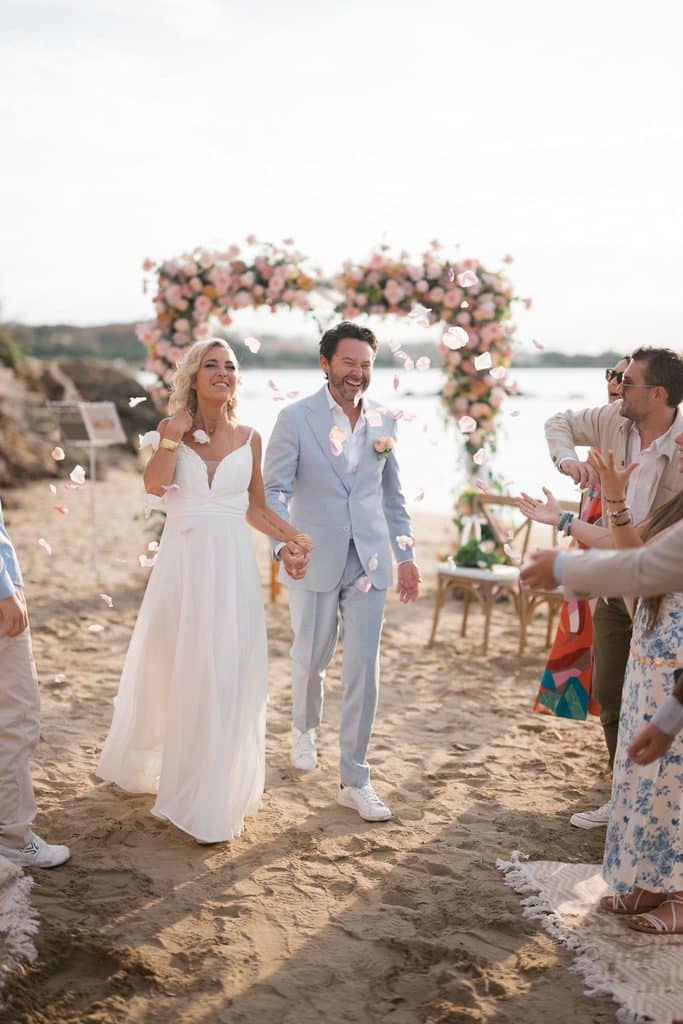
A ceremony facing the Mediterranean can create an unforgettable backdrop. The horizon, the sound of the waves and the changing light do much of the work.
A beach ceremony can feel relaxed and natural. A terrace overlooking the sea can create a more elegant atmosphere.
However, remember that the sea also means wind and sun.
Your floral design, ceremony structure and guest comfort should take those conditions into account.
A wedding surrounded by olive trees
If you love nature, do not limit your search to the coast.
Crete is covered with olive groves and rural landscapes. A celebration among the trees can feel much more intimate and authentic.
This setting also offers beautiful possibilities for dinner.
Imagine long tables, local food, warm lighting and the sound of the landscape around you.
It feels Mediterranean without relying on a stereotypical Greek wedding aesthetic.
A villa with a mountain or sea view
A private villa can create a different kind of destination wedding experience.
You can potentially bring several parts of the celebration together in one location. Getting ready, ceremony, cocktail, dinner and dancing can all take place within the same setting.
This can also make logistics easier for your guests.
Chania or Rethymno
If you prefer architecture to a completely natural setting, consider the historic towns of Chania and Rethymno.
Their Venetian influences create a more urban and sophisticated atmosphere.
You can also combine a wedding celebration with a few days exploring the old towns, restaurants and surrounding landscapes.
This is one of the reasons we like Crete so much.
You do not have to choose between nature and culture.
You can have both.
Practical information for planning a wedding in Crete

A destination wedding requires more than choosing a beautiful venue.
The logistics of getting everyone to the island deserve attention from the beginning.
Getting to Crete
Crete has two main international airports, Heraklion and Chania.
Your choice will depend on your destination, venue and available flights.
Before choosing a venue, check how long it will take your guests to reach it from the airport.
A beautiful location several hours away may create more logistical challenges than you expect.
Getting around the island
Crete is a large island.
Distances that look small on a map can take longer than expected because of winding roads and mountainous areas.
This is why transfers should be considered early.
For a group wedding, we recommend thinking about transportation as part of the guest experience.
Your guests should not have to work out how to get to the ceremony themselves.
How long should your guests stay?
For a destination wedding in Crete, we would recommend allowing several days rather than arriving the day before.
Three to five nights can give guests enough time to settle in and enjoy the destination.
If your budget and schedules allow it, a longer stay can turn the wedding into a real holiday.
You can organise a welcome dinner, a beach day, a boat trip or a relaxed brunch after the wedding.
The aim is not to fill every hour.
Your guests have travelled to Crete. Give them time to enjoy it.
What about a legal wedding?
It is possible for foreign couples to marry legally in Greece, including through a civil ceremony. However, the administrative process depends on your nationality and personal circumstances.
Documents, translations and formalities need to be checked well in advance.
For couples who prefer a simpler experience, a symbolic ceremony can be another option.
This allows you to focus on the celebration itself while handling the legal marriage separately.
We recommend treating the legal and symbolic aspects as two different questions when planning your destination wedding.
What about the budget?
There is no single price for a destination wedding in Crete.
The budget will depend on several factors :
- Number of guests.
- Venue.
- Catering.
- Floral design.
- Photography and video.
- Entertainment.
- Transportation.
- Accommodation.
- Wedding planner.
- Season.
- Level of production and styling.
A wedding for 20 people in a private villa will have a very different budget from a celebration for 100 guests overlooking the sea.
Your guest count is one of the first elements we would establish before building a realistic budget.
For couples planning from abroad, how to personalise a destination wedding without stress also offers useful ideas for creating a meaningful celebration without adding unnecessary complexity.
Crete wedding traditions and ways to experience the island

Greek weddings come with a rich collection of traditions.
Some are very familiar. Others are more unusual.
One traditional idea mentioned in our original guide involves writing the names of unmarried friends on the soles of the bride’s shoes. The name that becomes the most worn away during the celebration is traditionally associated with the next person to marry.
You do not need to incorporate every tradition.
Instead, choose the ones that feel meaningful to you.
The same applies to the food.
Crete has a strong culinary identity, with local products, olive oil, vegetables, cheeses, seafood and traditional dishes.
Food can become one of the easiest ways to introduce your guests to the island.
You could serve local specialities during the welcome dinner. You could organise a tasting. You could choose a menu inspired by Cretan cuisine for the wedding reception.
This makes the destination feel present without turning the wedding into a themed event.
Music can play the same role.
A few local touches can be enough to give the celebration a sense of place.
The most beautiful destination weddings often do not try to recreate a postcard.
They let the destination speak for itself.
A destination wedding in Crete is not for everyone
We think this is worth saying.
Crete is wonderful, but it is not the right destination for every couple.
If you want a highly urban wedding with museums, galleries and sophisticated city life just outside your venue, Paris may suit you better.
If you want an island that feels polished and compact, another Greek destination may feel easier.
Crete is for couples who love nature.
It is for those who appreciate landscapes that can feel wild rather than perfectly manicured.
It is for couples who love the contrast between the sea and the mountains.
It is also for people who want their guests to experience somewhere rather than simply attend a wedding.
That is the real appeal for us.
Crete has character.
And character gives a destination wedding its soul.
A simple checklist for your Crete wedding
- Choose the area of the island before selecting your venue.
- Check airport access and transfer times.
- Consider the temperatures for your chosen month.
- Avoid planning the ceremony during the hottest part of the day.
- Think about shade and guest comfort.
- Plan transportation for your guests.
- Allow several days for the destination experience.
- Decide whether your ceremony will be legal or symbolic.
- Explore local food and traditions.
- Build a realistic budget around your guest count.
FAQ – destination wedding in Crete
Is Crete a good destination for a wedding?
Crete is particularly well suited to couples who love nature, Mediterranean landscapes and authentic experiences.
The island combines beaches, mountains, olive groves, villages and historic towns. This variety allows couples to create a wedding that feels connected to the destination.
What is the best month to get married in Crete?
June and September are particularly attractive for outdoor weddings because they generally offer warm, sunny weather without the strongest summer heat.
July and August can also be beautiful, but temperatures can become very high. Your wedding timeline should take this into account.
Is Crete very hot in July and August?
Yes, it can be.
Daytime temperatures can regularly reach around 30°C or more during the summer, with particularly strong heat in direct sunlight.
We recommend planning outdoor ceremonies later in the day and providing shade and refreshments for guests.
How many days should we stay in Crete for our wedding?
We recommend staying for at least three to five nights if possible.
This gives you time to settle in before the wedding and enjoy the destination with your guests.
A longer stay can also allow you to organise additional experiences before or after the celebration.
Can foreigners legally get married in Crete?
Yes, foreign couples can marry legally in Greece, but the required documents and administrative process depend on their nationality and personal situation.
These formalities should be checked and prepared well in advance.
What type of wedding venue can we choose in Crete?
You can consider many different settings :
- Beachfront venues.
- Private villas.
- Hotels.
- Olive groves.
- Countryside properties.
- Terraces overlooking the sea.
- Historic settings.
- Venues near Chania or Rethymno.
The right choice depends on the atmosphere you want and the logistics for your guests.
Is Crete suitable for a wedding with many guests?
Yes, but logistics become more important as the guest list grows.
Accommodation, airport transfers, transportation between venues and guest activities should be planned carefully.
For destination weddings, guest logistics can have a major impact on the overall experience.